
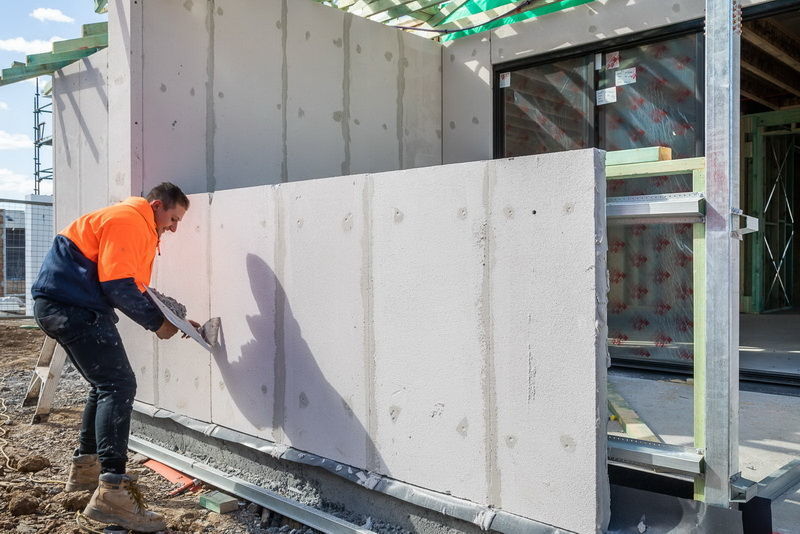
The plans are approved, the frame’s up, and now you need a Hebel crew. Pick the wrong one and you don’t find out for months — until the render starts cracking along the panel joints and you’re chasing a warranty claim.
The fastest way to tell a real Hebel installer from someone who treats it like oversized brickwork is to ask seven specific questions and listen for whether the answers come back specific. Below is each question, the answer you want to hear, and the answer that should make you walk. We install Hebel and Nasahi across Sydney and NSW for a living, so these are the same things we’d check if we were hiring the crew instead of being it.
1. Do you install to the Hebel design drawings, or work it out on site?
The answer you want: “We follow the engineer’s and Hebel layout drawings — joint positions, panel layout and fixings are all set out before we start.”
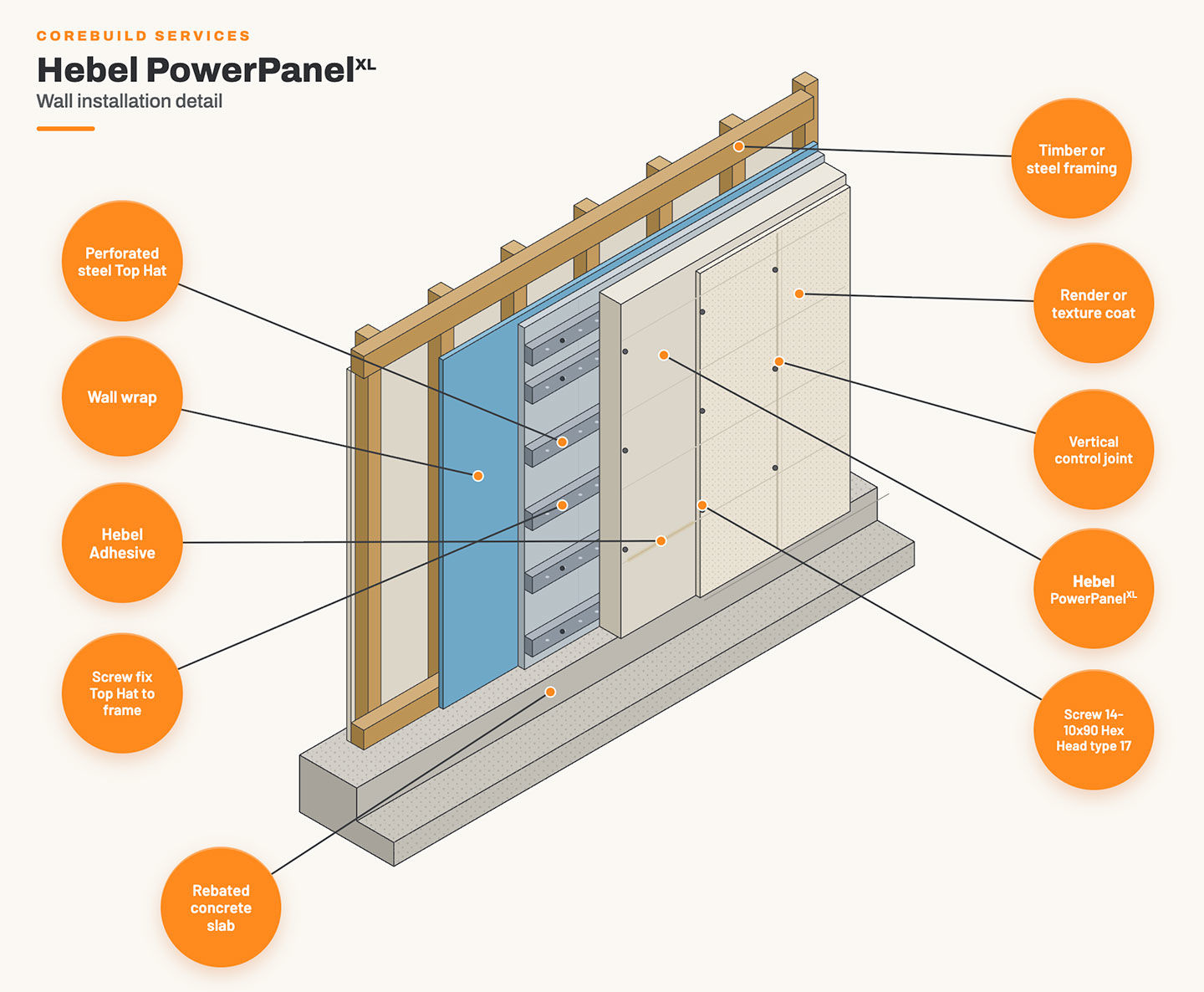
Hebel isn’t a material you improvise. Joint locations and details are shown on the project drawings, and the manufacturer’s own specification is blunt about it: you don’t eliminate, relocate or add joints without prior approval. An installer who shrugs at “what do the drawings say?” is telling you they’re going to make it up as they go. That’s how joints end up in the wrong place and walls crack where they were never designed to flex.
2. How do you handle movement joints — and how often do you put them in?
The answer you want: a number. “Control joints at no more than 6-metre centres, plus wherever the engineer’s specified them and where the wall meets a different material or structure.”
This is the single biggest tell. Hebel’s technical manual caps continuous wall runs at 6 metres before a movement joint is required, and that measurement carries around corners until it hits the end of the wall or a joint. Articulation joints have to be at least 10mm wide. Skip them, space them too far apart, or seal them solid and the wall has nowhere to put the stress when the building moves — so it cracks. If an installer can’t give you a spacing figure off the top of their head, they don’t understand why the joints are there.
| Quick gut-check: Ask “what’s the maximum run of wall before you need a movement joint?” If the answer isn’t “6 metres” (or a reason it’s tighter on this job), keep interviewing. |
3. What coating system are you putting on, and why that one?
The answer you want: “A proper AAC coating system — vapour-permeable, water-resistant, flexible enough to bridge hairline movement — applied within about 60 days of install. Not just paint.”
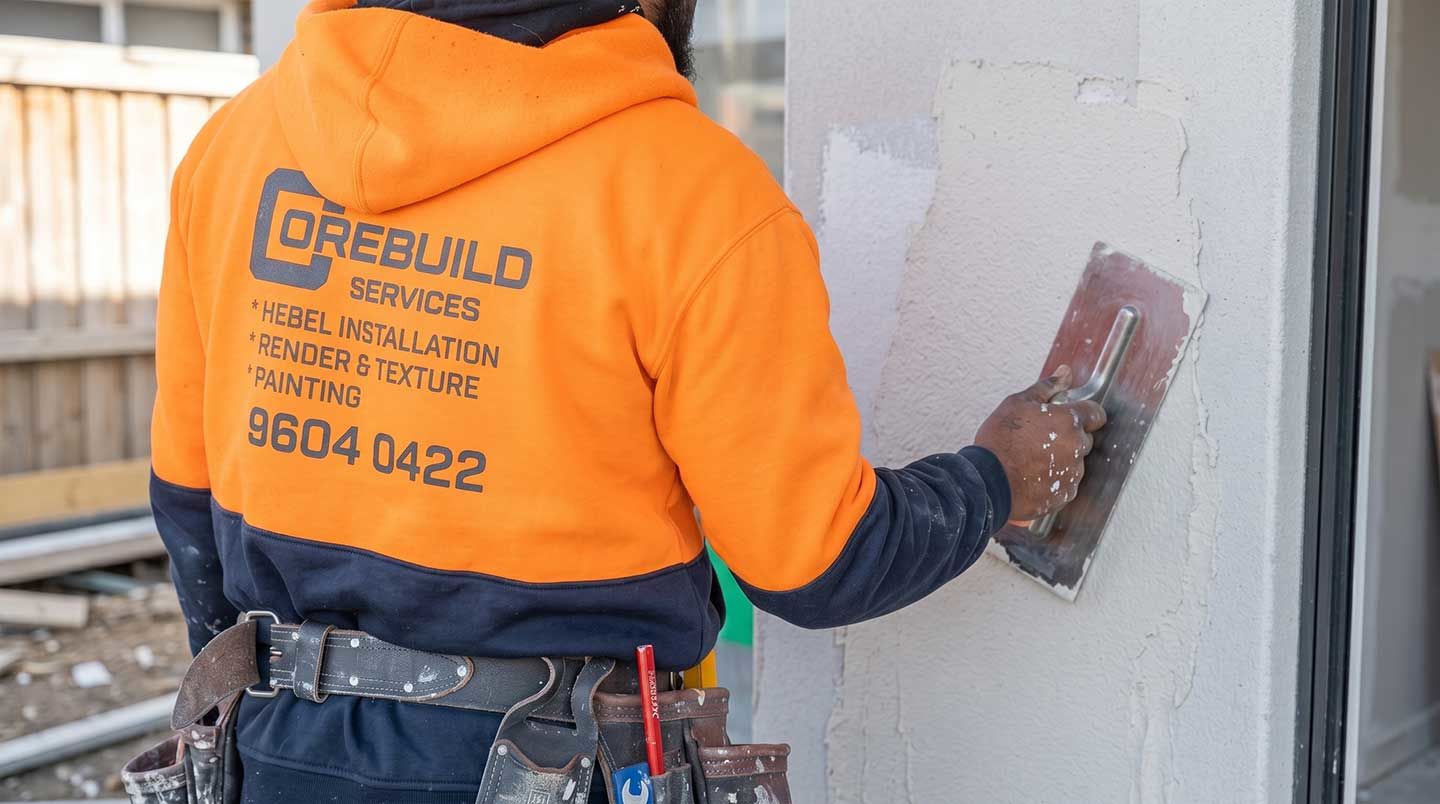
Hebel panels are not weatherproof on their own. The external coating is a required part of the system, and the manufacturer is explicit that a plain paint coat is not adequate. A compliant coating has to be water-resistant but still let vapour escape, and elastic enough to bridge a 1mm crack. Hebel recommends getting it on as soon as practical, generally within 60 days of installation. An installer who treats the coating as an afterthought — or “any painter can do it later” — is risking both the wall and the warranty.
If this is already sounding like more than you want to manage across separate trades, that’s a fair instinct — a single crew handling Hebel installation, rendering and coating in Sydney removes the gaps where this kind of thing goes wrong.
4. Are you licensed, and can I check it?
The answer you want: “Yes — here’s the NSW contractor licence number, look it up on Fair Trading.”
A genuine contractor gives you the number without flinching. In NSW you can verify any building licence on the NSW Fair Trading website in under a minute — check it’s current, in the right name, and covers the work. While you’re at it, ask for current public liability and workers compensation. “We’re fully licensed and insured” with no number to back it is just a sentence.
5. What happens if a panel has to be cut or a penetration added on site?
The answer you want: “Panels only get cut where the Hebel drawings allow it, and any extra penetration goes through written approval first.”
This question separates the trades who respect the system from the ones who’ll grab a saw. Panels are only meant to be cut on site where the Hebel drawings indicate, and variations need written sign-off. Same with penetrations — an extra hole in the wrong place can compromise the panel’s structural performance, and the manufacturer’s position is that unauthorised penetrations can mean the panels get replaced at the installer’s cost. You want someone who pauses and checks, not someone who improvises a hole for a downpipe.
6. Who actually turns up on site — your crew or subbies?
The answer you want: straight accountability. At Corebuild it’s our own crew start to finish, so there’s no blame-shifting between the panel installer, the renderer and the painter when something needs sorting.
There’s nothing inherently wrong with subcontracting, but you need to know who holds the licence, who carries the insurance, and who you call when there’s a defect. The risk with a chain of subbies is the gap between trades — the installer blames the renderer, the renderer blames the installer, and you’re stuck in the middle. Ask who’s responsible for the wall as a whole system, not just their slice of it.
7. What does your warranty cover — and what voids it?
The answer you want: someone who can separate their workmanship from the product warranty, and who knows the NSW statutory position.
Beyond any written workmanship warranty, NSW law gives you statutory warranties on residential building work: two years for minor defects and six years for major (structural) defects. If something’s wrong, lodge a written defect notice — and get the minor-defect items in before the two-year mark, because that window closes. A switched-on installer will also tell you straight that using a non-compliant coating, or skipping the coating timeframe, can undermine the manufacturer’s product warranty. If they can’t explain the difference between their warranty and Hebel’s, they probably don’t carry much of either.
Red flags: answers that should worry you
A few responses that, in our experience, signal an installer who doesn’t really know Hebel:
| “It’s basically the same as bricklaying.” | It isn’t. Different fixings, different joints, a mandatory coating system. |
| No number for joint spacing. | If “6 metres” doesn’t come up unprompted, the cracking risk just went up. |
| “Paint goes on later, that’s the painter’s problem.” | The coating is part of the wall system, not a finishing touch. |
| Vague on licensing. | A real contractor hands you a number to check. |
| A quote far below everyone else’s. | On Hebel, cheap usually means skipped joints, the wrong coating, or a crew learning on your wall. |
When the answers add up
If an installer can field these seven questions clearly and specifically — joint spacing off the top of their head, a real coating spec, a licence number, a straight answer on who’s accountable — they understand the scope. That’s most of the job of vetting done.
Frequently Asked Questions
Q: How do I check if a Hebel installer is licensed in NSW?
A: Look up their contractor licence number on the NSW Fair Trading website. Confirm it’s current, held in the correct name (the business or person quoting you), and covers building or cladding work. A legitimate installer will give you the number on request — if they won’t, treat that as your answer.
Q: Does Hebel have an accredited installer program?
A: CSR runs a “find a specialist” network for Hebel, and many quality installers describe themselves as accredited or master installers. Accreditation is a useful signal that a crew has manufacturer training, but it’s not a substitute for the checks above — verify the licence and ask the joint and coating questions regardless.
Q: Why do Hebel walls crack, and is it the installer’s fault?
A: Most Hebel cracking traces back to movement joints that were spaced too far apart, placed wrong, or sealed solid — so the wall has nowhere to absorb building movement. Some hairline cracking in the coating is cosmetic, but structural cracking along panel joints usually points to an installation or coating shortcut, not the product.
Q: Is the cheapest Hebel quote ever the right call?
A: Rarely. On Hebel, a quote well below the others usually means corners are being cut somewhere you can’t see yet — fewer movement joints, a cheaper non-compliant coating, or a crew still learning the system. Get at least two or three quotes and compare what’s actually included, not just the bottom line.
Hiring a Hebel Installer in Sydney?
That’s the standard we hold ourselves to — we work to the Hebel drawings, cut the joints where they belong, and stand behind the whole wall, not just one trade’s slice of it. If you’d like a quote from a crew that can answer all seven of these without blinking, get in touch.
Call: (02) 9604 0422
Web: See our Hebel installation service or contact us for a quote
Last updated: June 2026. © 2026 Corebuild Services.